
What Is a Drone Detection System?
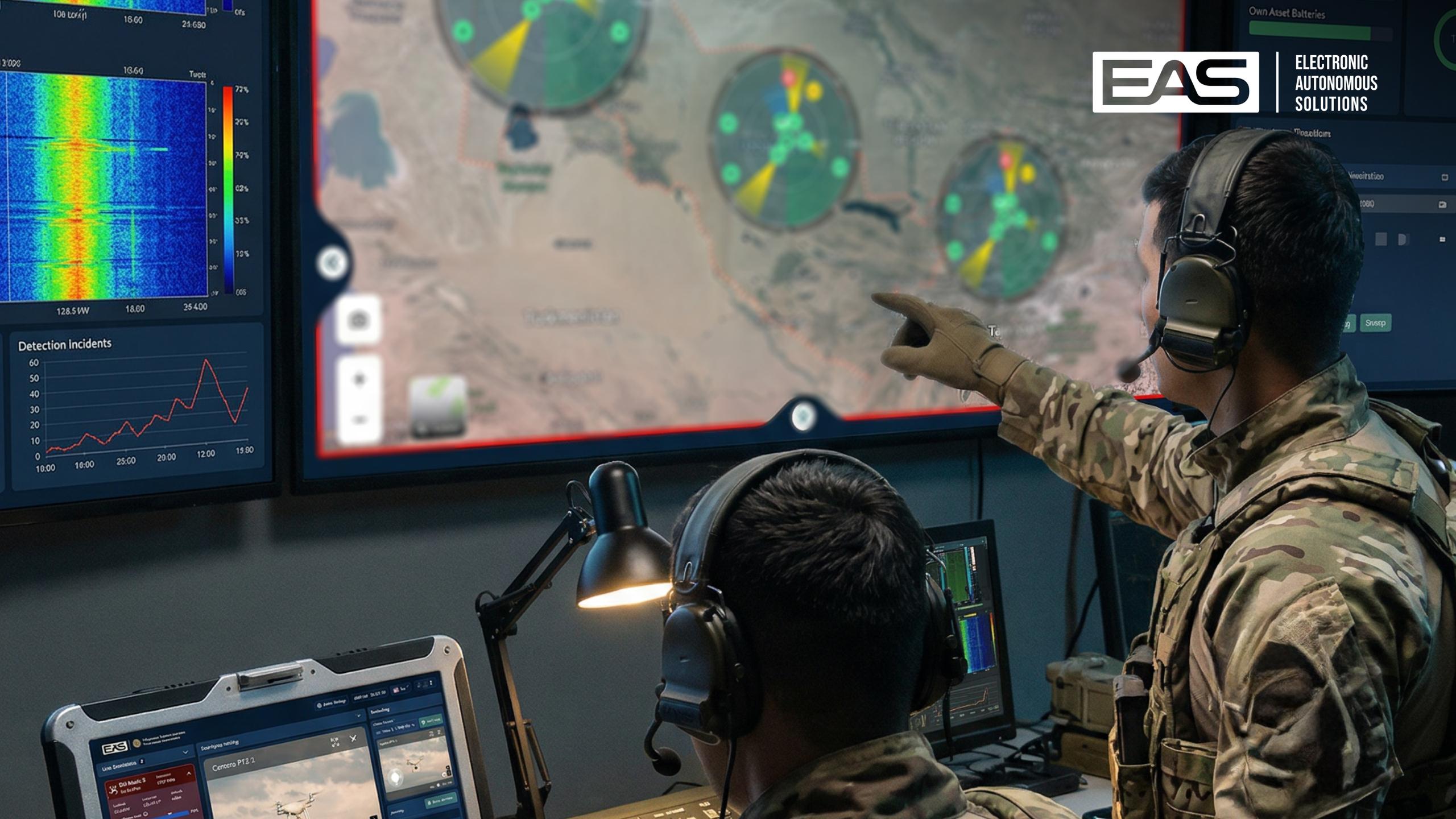
A drone detection system — also referred to as a UAV detection or counter-UAS solution — is a technology complex designed to identify unmanned aerial vehicles within a protected area. Modern systems integrate multiple sensor types into a unified platform: RF sensors intercept control signals transmitted between the drone and the pilot’s remote, radar tracks physical targets in the airspace, while optical cameras and acoustic devices capture the visual and acoustic signatures of unmanned aircraft. Artificial intelligence algorithms process data from all sensors simultaneously and classify threats with accuracy exceeding 95%.
According to industry reports, the number of unauthorized drone incidents at critical infrastructure facilities increased by 35% in 2024–2025. A single drone-related closure at a major airport can cause between $1–$5 million in losses per incident lasting one to three hours; a corporate data leak resulting from aerial surveillance over a production or R&D facility can reach up to $10 million. The dramatic decline in commercial drone prices — now starting at just a few hundred dollars — has made UAVs an accessible tool not only for hobbyists but also for malicious actors, dramatically increasing the security burden on organizations worldwide.
How Does a Drone Detection System Work?
A UAV detection complex operates in three sequential stages: continuous monitoring of the protected area, target identification, and operator alert or automatic activation of countermeasures. This architecture delivers classification accuracy above 95% and response times of 2 to 5 seconds.
Stage 1 — Monitoring: Around-the-Clock Scanning
Radar installations continuously scan the protected zone 24/7, detecting physical targets in the airspace. In parallel, RF sensors monitor the radio frequency spectrum across the 300 MHz–6 GHz range — most commercial drones operate on 2.4 GHz and 5.8 GHz frequencies. Optical cameras and thermal imagers provide visual confirmation of airborne objects, while acoustic sensors detect the characteristic rotor sound of unmanned aircraft at distances of up to 800 meters.
Stage 2 — Target Identification and Classification
Once a suspicious target is detected, the identification module activates. Machine learning algorithms analyze trajectory, speed, radar cross-section, and RF profile. A drone’s flight path is distinguished from that of a bird by its linearity and stability; RF sensors identify the control signal absent from birds and conventional aircraft. Advanced systems can determine the drone’s type and model, as well as pinpoint the pilot’s location.
Stage 3 — Multi-Sensor Verification and Response
The central command-and-control platform correlates data from all sensors and builds a unified, real-time aerial picture. The multi-sensor approach enables cross-verification of threats: radar detects, optics confirm; in rain or fog, thermal cameras compensate for reduced optical performance. The platform automatically alerts operators or initiates countermeasures.
Detection Technologies: A Comparison of Methods
Each detection method has distinct strengths and limitations. Radars cover ranges from 3 to 10 kilometers, operate continuously in all weather conditions, and are effective against autonomous drones with no radio link. RF sensors with a detection radius of up to 8 kilometers intercept control signals and locate the pilot — a capability of particular value to law enforcement — but are ineffective against fully autonomous UAVs. AI-enabled optical systems provide visual identification at distances of up to 5 kilometers with 90–95% accuracy; thermal imagers are effective at night and in low-visibility conditions, with a range of up to 3 kilometers. Acoustic sensors (up to 800 m) detect the characteristic sound of motors and rotors and are used as a supplementary tool in environments where radio wave propagation is limited — such as hangars, warehouses, and tunnels. Maximum effectiveness is achieved only through the combined use of multiple methods within a unified command platform.
Industries That Require Drone Protection
Unauthorized UAVs pose a threat to a broad range of facilities and organizations — from civil aviation to private corporations.
Aviation and Airports. In 2024–2025, over 150 runway closure incidents caused by drones were recorded, resulting in losses exceeding $50 million. Airport drone detection solutions provide perimeter monitoring within a radius of up to 10 kilometers.
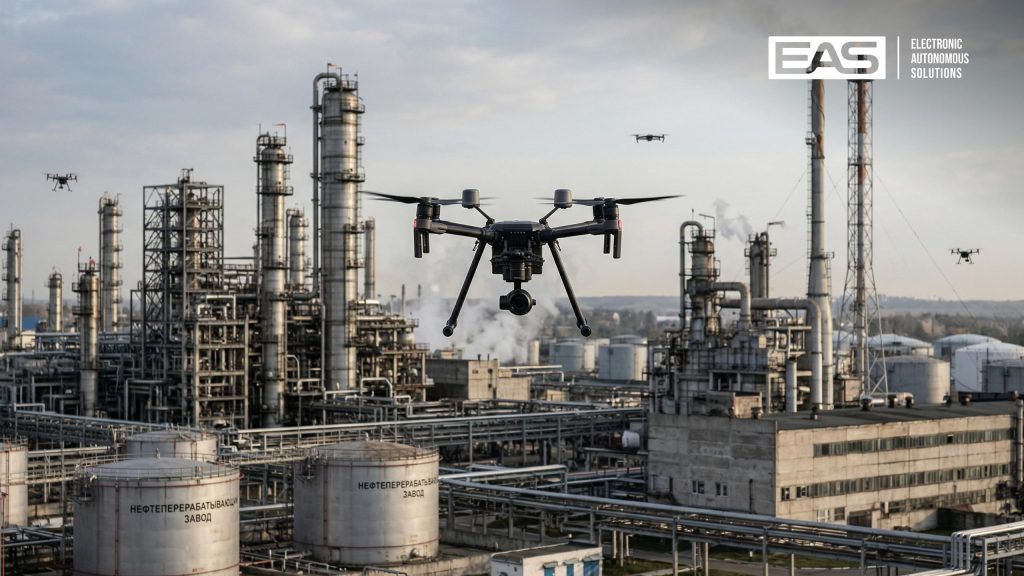
Energy Infrastructure. Power plants, oil refineries, and gas pipelines are exposed to reconnaissance flights and physical attack. The damage from a drone strike on a refinery can reach hundreds of millions of dollars.
Government and Military Facilities. Government buildings, military bases, and embassies require robust protection against aerial surveillance and direct attack. Multi-layered systems with electronic jamming modules secure the perimeter without interfering with legitimate aircraft operations.
Correctional Facilities. According to European prison service data, one in three smuggling incidents in 2023–2024 involved drones. RF sensors and radars detect UAVs before they reach the perimeter.
Mass Public Events. Concerts, sports championships, and state ceremonies drawing thousands of attendees are potential targets for rogue drones. Mobile detection systems can establish temporary airspace protection over any venue within hours, without dependence on fixed infrastructure.
Corporate Sector. Drones equipped with high-resolution cameras can capture prototypes, production lines, and documents through building windows. Counter-drone protection for corporate campuses and R&D facilities prevents the theft of intellectual property worth millions of dollars.
Why Invest in Drone Detection?
According to EUROCONTROL, the number of airport security violations involving drones is growing at 30–35% per year. The widespread availability of commercial UAVs has made them an attractive tool for actors ranging from careless hobbyists to organized criminal networks. The consequences of a single incident are comparable in scale to the cost of a comprehensive protection platform:
- Airport closure lasting 1–3 hours: losses of $1–$5 million;
- Corporate data leak via aerial reconnaissance: up to $10 million;
до 10 млн. долларов; - Attack on an energy facility: potential losses in the hundreds of millions of dollars.
EAS Company Solutions
Electronic Autonomous Solutions (EAS) develops and manufactures counter-UAV systems for government agencies and critical infrastructure operators.

EAS DOME — the flagship automated UAV detection and neutralization platform. Combines radar, RF, and electro-optical detection with electronic warfare modules on a single command-and-control platform.
EAS DOME Stationary — the fixed-site variant of the flagship platform in a ruggedized containerized configuration. Designed for continuous 24/7 monitoring and protection of strategic facilities.
EAS AetherScan — a stationary passive RF sensor module for continuous perimeter monitoring. Deployed at airports, energy facilities, and military bases.
EAS AirGuard — a stationary detection and RF jamming system for close- and medium-range facility protection. Operates autonomously or as part of an integrated system.
EAS-ADE A3M/A2M AIRWALL — stationary systems providing round-the-clock perimeter protection for critical infrastructure, industrial, and military zones, with sector-based threat suppression.
EAS-ADS AIR SHIELD-1N — an integrated system designed to protect mobile assets in coastal and maritime environments. Built to withstand marine operating conditions.
EAS-ADS AIR SHIELD-1MO — a mobile system for protecting vehicle convoys, motorcades, and mass public events. Provides continuous protection during movement.
EAS-ADS AIR SHIELD-1MS — a mobile system with a deployable mast platform for tactical checkpoints and mobile command posts. Provides protection both on the move and at a halt.
EAS-1 FOWLER — a portable jammer that blocks drone control channels, video transmission links, and satellite navigation signals. Optimized for mobile security teams and the protection of high-value sites.
EAS-2 AIR FENDER — a compact portable jammer for personal protection and securing limited perimeters. Suited for VIP escort operations and temporary facility protection.
Conclusion
Drone detection has become an essential component of modern security infrastructure — on a par with video surveillance and access control. The integration of radars, RF sensors, optical modules, and AI algorithms enables threat detection within a radius of several kilometers, with accuracy exceeding 95% and response times from as little as 2 seconds. The rising number of drone incidents and the declining cost of UAVs have made proactive airspace protection not an optional enhancement, but a necessary measure. EAS Company provides end-to-end implementation: from solution selection and equipment supply through to installation and long-term technical support. The EAS product line covers requirements at any scale — from mobile protection for temporary events to fixed-site monitoring of airports and military bases.
Frequently asked questions
How does a drone detection system distinguish UAVs from birds and aircraft?
Modern platforms use multi-parameter analysis to accurately classify aerial targets. A drone’s trajectory is linear and stable — birds constantly change direction and altitude. RF modules detect the pilot’s control signal, which is absent from birds and manned aircraft. AI-powered optical systems analyze the silhouette and flight behavior of the target. Multi-sensor verification achieves classification accuracy above 95% with a false alarm rate below 3%.
What is the maximum detection range?
Radars detect large drones at distances of up to 10 kilometers and small-sized UAVs at 3–5 kilometers. RF equipment is effective within a radius of up to 8 kilometers. Optical cameras operate at ranges of up to 5 kilometers; thermal imagers up to 3 kilometers at night. The integrated EAS DOME platform delivers reliable threat detection at up to 10 kilometers through the combined use of all sensor types.
Do the systems operate in bad weather and at night?
Professional systems operate continuously under all environmental conditions. Radars and RF sensors are unaffected by weather or ambient light. Optical cameras experience some degradation in heavy fog, but thermal imagers maintain full effectiveness in any conditions. The multi-sensor architecture compensates for the reduced performance of individual modules through the remaining detection channels.
How quickly does the system detect a threat?
Modern platforms detect and classify an airborne target in 2 to 5 seconds. Operator alerts are generated immediately. Systems equipped with jamming modules can automatically neutralize a drone without operator intervention.
Is specialized personnel training required?
Basic training takes between 3 and 15 days depending on the product type, and includes both theoretical instruction on equipment operating principles and hands-on practice with real systems. The intuitive interface of EAS products minimizes the technical knowledge threshold for operators. EAS Company provides a full training cycle for personnel as well as ongoing technical support.