
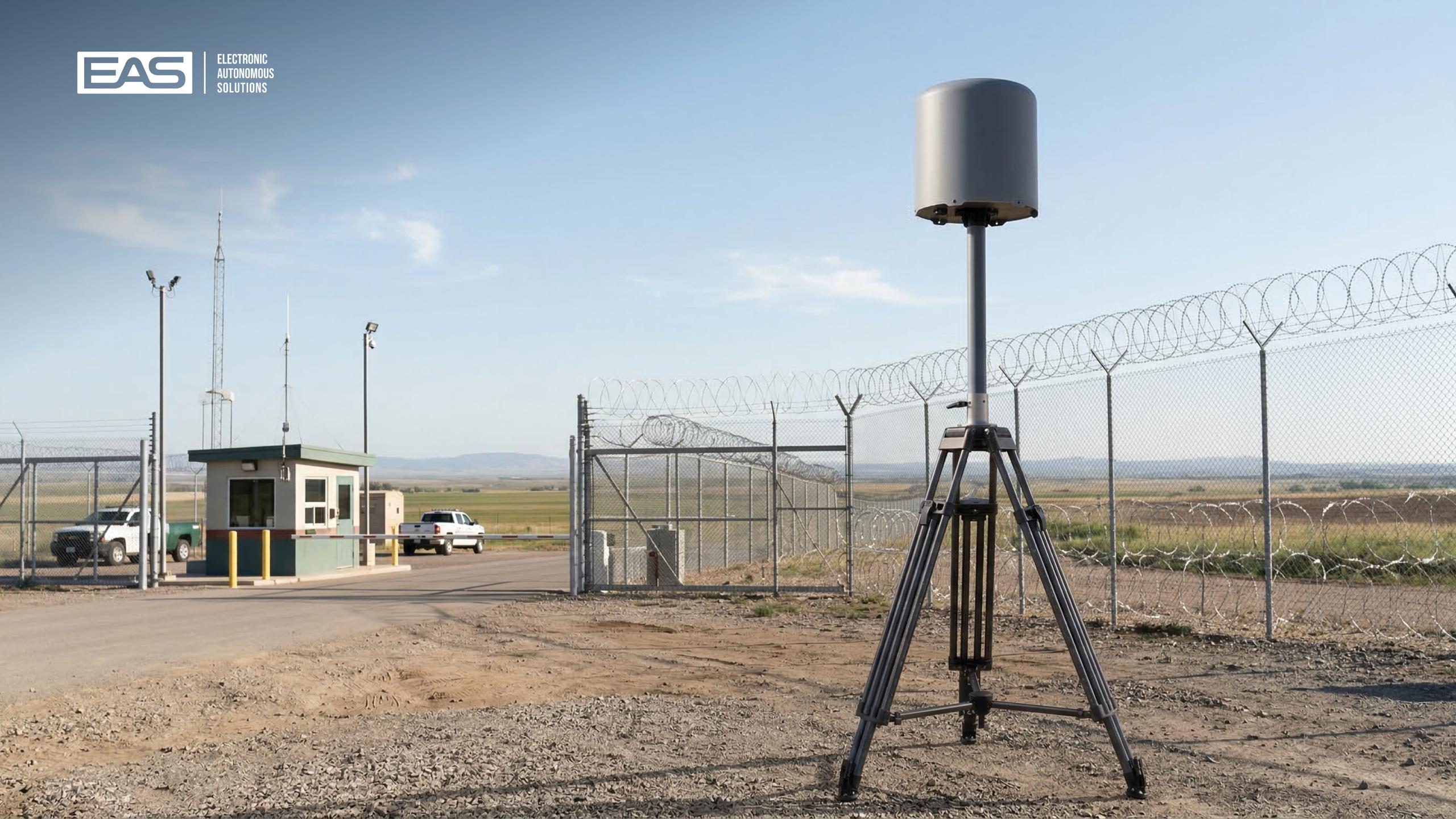
In modern conditions, ensuring the security of critical infrastructure facilities — energy hubs, industrial complexes, and strategic transport arteries — requires a transition to advanced methods of airspace control. In the context of the widespread proliferation of unmanned aerial vehicles (UAVs), the introduction of advanced detection and identification technologies becomes the cornerstone of effective protection.
A clear distinction currently exists between detection technologies and countermeasures.
Detection: Agencies and organizations have the right to deploy monitoring systems (acoustic, optical, radar) for the timely identification of threats.
Countermeasures: The use of electronic warfare (EW) systems and other UAV neutralization methods without the direct authorization of competent authorities is strictly prohibited. Violation of this requirement is treated as an encroachment on national security and a breach of radio frequency spectrum regulations.
Modern international practice and domestic expert research in the field of security identify four key technological directions for UAV detection:
- Acoustic monitoring — based on identifying the specific sound signatures of UAVs. This method is passive, requires no use of the radio frequency spectrum, and is effective in densely built-up areas where visual observation is limited.
- Electro-optical and infrared identification (EO/IR) — the use of high-resolution video sensors and thermal imagers enables visual confirmation of a target and identification of its type at any time of day, which is critical for timely operational decision-making.
- Radar control — the use of active radio waves ensures the detection of objects at long range and the precise determination of their coordinates (altitude, speed, direction), regardless of weather conditions.
- Radio Frequency (RF) analysis — this technology enables the interception of control signals between a drone and its operator. It is the only method that allows operators to determine not only the location of the UAV, but also the precise position of its operator.
To mitigate the limitations of individual sensors — such as reduced visibility caused by dust storms or temperature inversions in sharply continental climates — the creation of an integrated monitoring framework is recommended. This approach involves deep data fusion, in which heterogeneous sensors operate as a unified system: a primary signal from one sensor automatically activates and cues other devices to confirm and track the target.
The implementation of these technologies is a necessary step in executing the national security strategy aimed at protecting citizens' lives and ensuring the uninterrupted operation of critical economic sectors.
Author: Gubaydullin D.M., EAS Company